
Modular interiors · Hyderabad
VM Modular Solutions
Since 2023
We repositioned a B2B manufacturer into a consumer brand, built the demand engine to feed it, and the systems to run it.
vmmodular.com- Brand Repositioning
- Visual Identity
- Paid Search
- Marketing Ops
- Systems & Automation
- Web Development
500+
enquiries per month (monthly average)
100+
qualified leads per month (monthly average)
3x
growth in monthly revenue, now consistently seven figures
3–4%
customer acquisition cost as a share of contract value
0%
increase in media budget over the same period
The challenge
Three gaps, exposed at once
In 2023, VM Modular decided to change who it sold to. The company had spent years as a B2B manufacturer: an in-house production unit supplying modular interiors through builder and contractor relationships. That business worked, but it came with the structural limits of B2B: a small number of large accounts, pricing pressure from the top, and growth that depended entirely on relationships nobody could scale on command.
No consumer brand. When you sell through builders, your identity only has to signal competence in a procurement conversation. It does not have to be found, trusted, or chosen by a family deciding who gets to finish their home.
No demand channel. Digital had produced almost nothing, not because it was run badly, but because there was nothing consumer-facing to send traffic to. Paid search was not underperforming. It was structurally unable to work yet.
No operating system for consumer volume. B2B runs on a handful of accounts a quarter, managed in someone's head. B2C runs on hundreds of enquiries a month, and nothing existed to receive, route, qualify or measure them.
Fixing one without the others would have failed. That is the actual story of this engagement.
Part one · Repositioning
Rebuilding the brand for the customer it now wanted
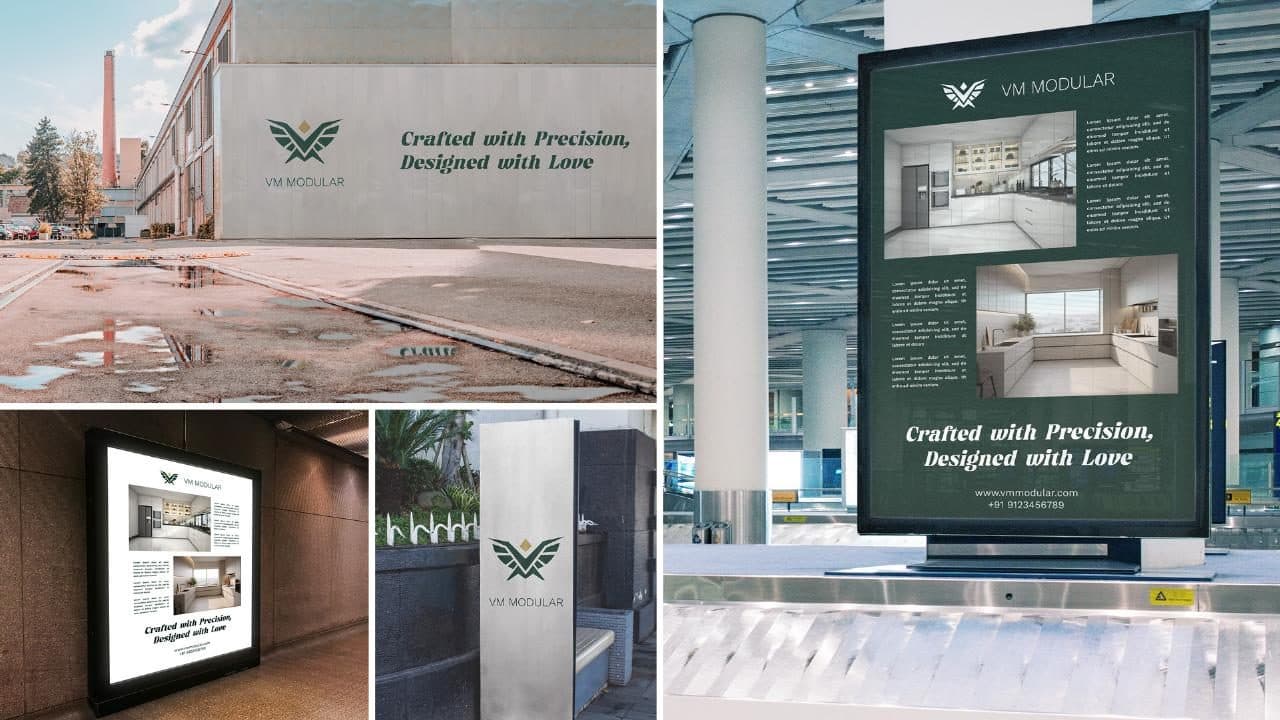
We designed VM Modular's visual identity: the mark, the colour system, the type, and the visual language applied across every touchpoint the homeowner would encounter.
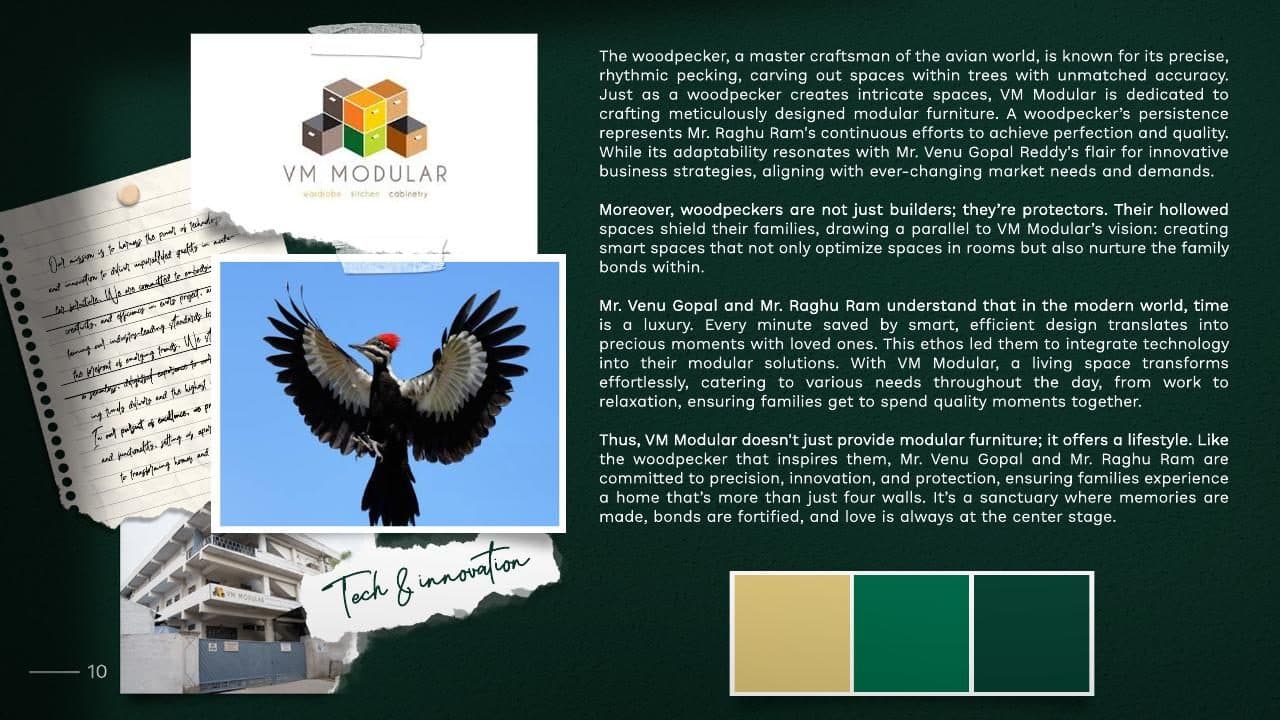
The identity that existed was a set of coloured cubes above the words wardrobe · kitchen · cabinetry. It described the product accurately. That was the problem: it spoke the language of a supplier listing its capabilities, and nothing in it gave a homeowner a reason to feel anything.
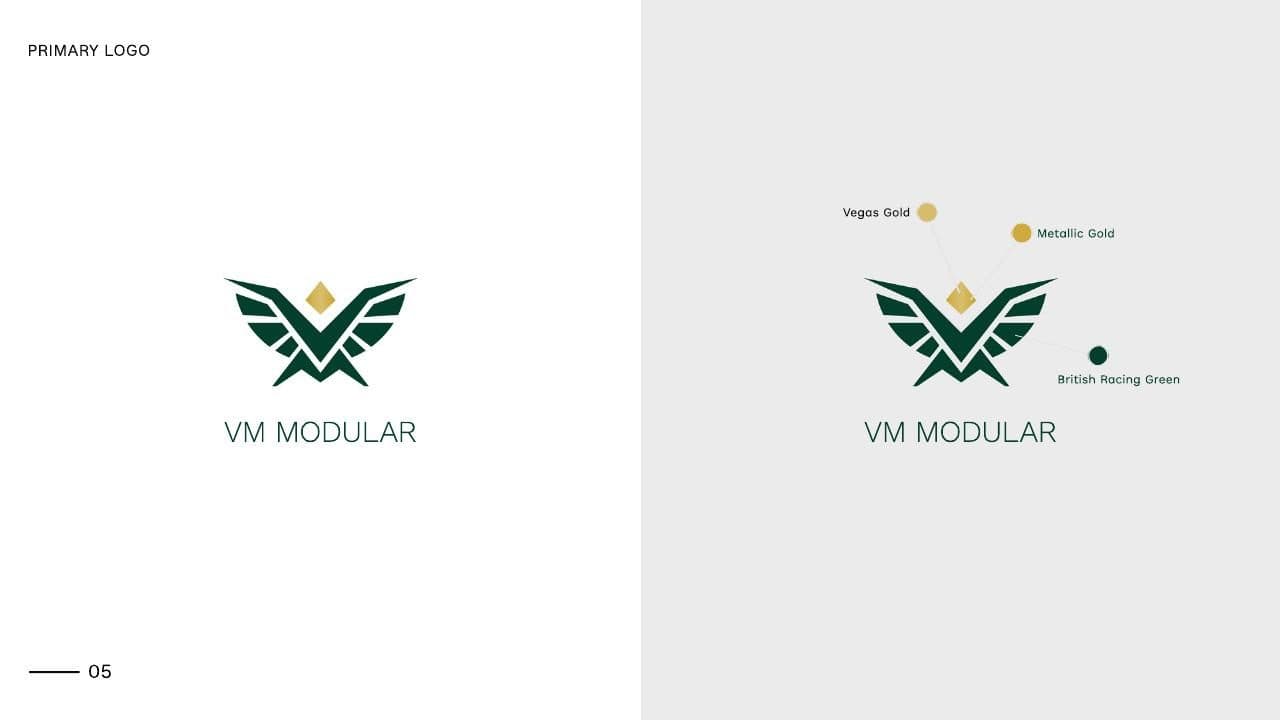
The replacement was built around a woodpecker: a bird that carves precise spaces into wood, and one that shelters its family inside what it builds. Precision and protection: the two things a family actually needs to believe about whoever is going to take their empty flat apart and put it back together.
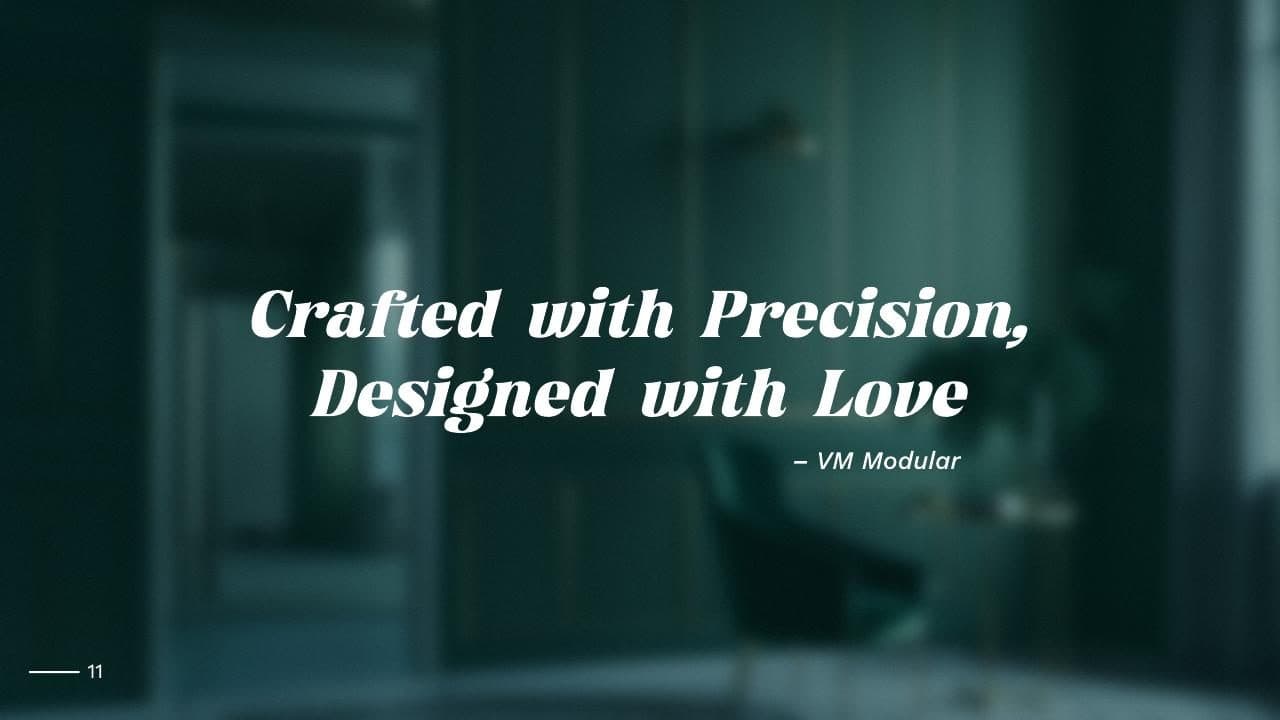
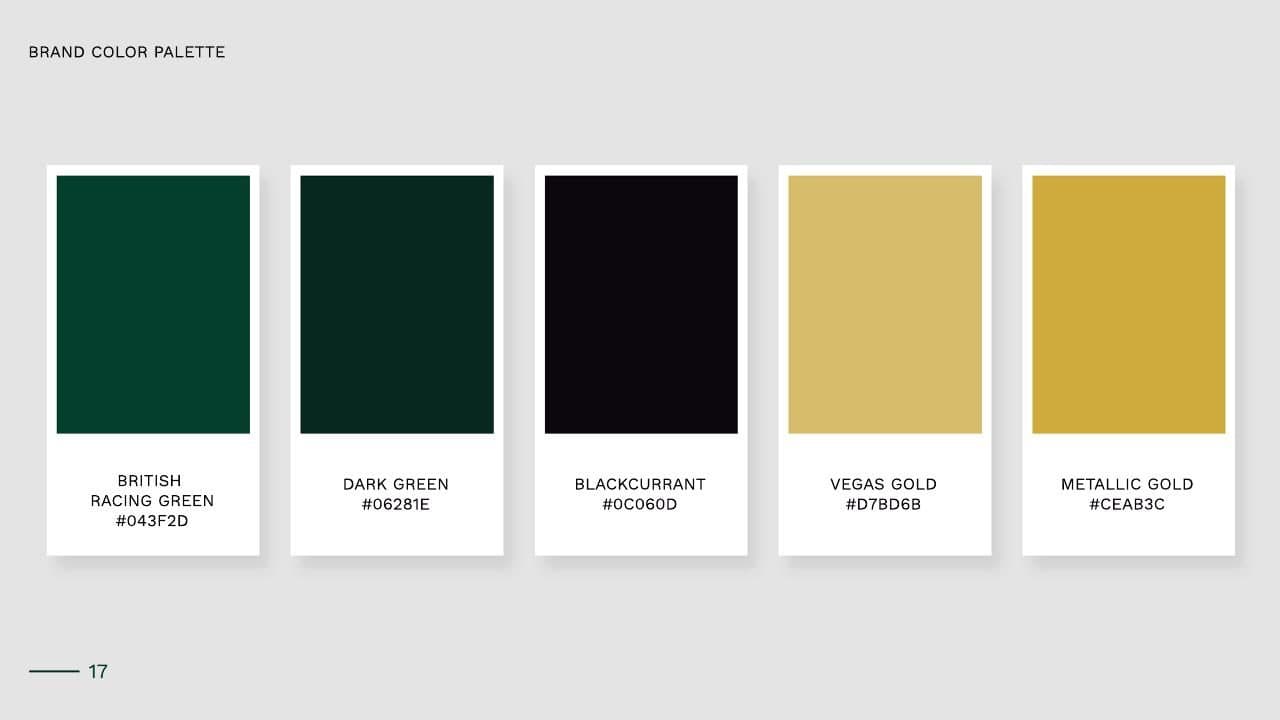
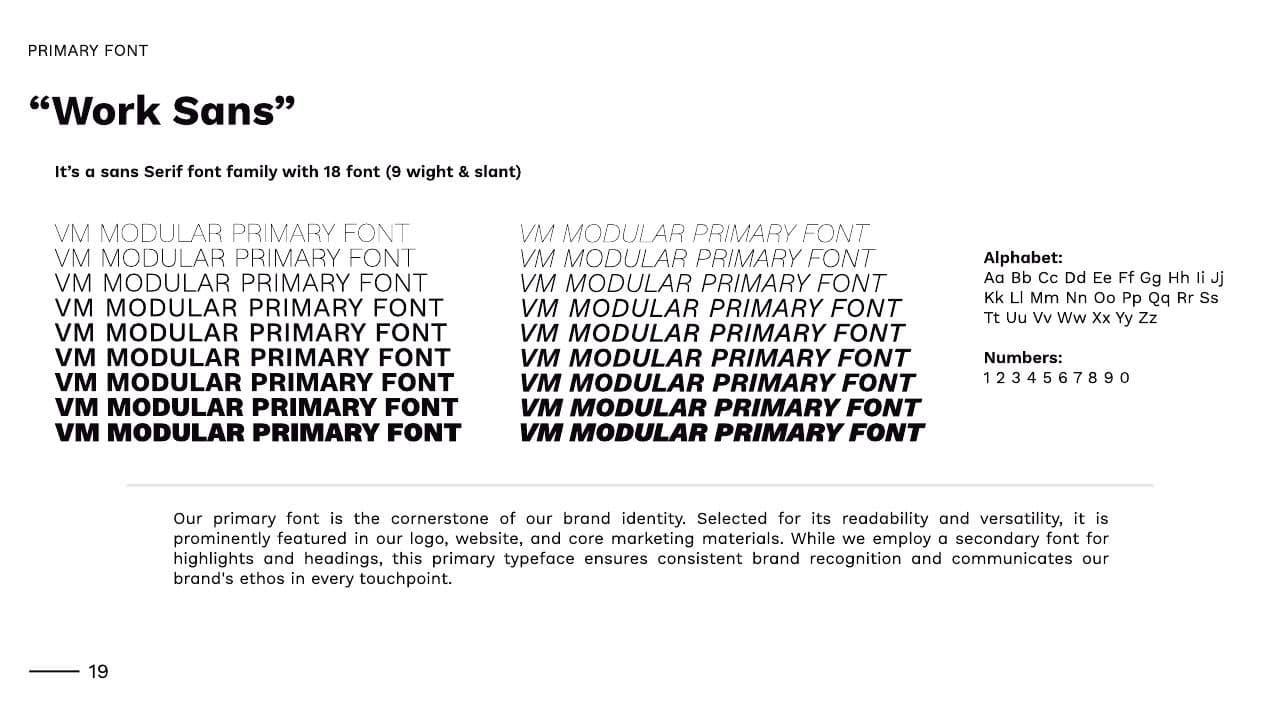
The palette moved to British Racing Green with Vegas and Metallic Gold: green for nature and new beginnings, gold for the aspiration a considered purchase at this level has to carry. Work Sans for clarity across every functional touchpoint, Chiefland for the moments that need presence. And a line that stated the whole thesis in five words: Crafted with Precision, Designed with Love.
A homeowner comparing three quotes on a fifteen-lakh-plus fit-out is buying confidence as much as cabinetry. The identity had to do work in that decision, and hold up on a landing page beside national competitors with far larger budgets.
Part two · The engine
We changed what the account was buying
The decisive move was refusing to optimise toward form fills. A qualified lead was defined offline, in the client's own terms: a Hyderabad project, above a minimum project value, in scope, and ready to begin within three months. Presales makes that call, not a landing page, and not the platform.
We built the loop that makes it measurable: click → enquiry → presales qualification → sales-qualified → booking, tracked end to end and fed back into Google as a signal. This is the part most accounts skip, and the part that turns advertising into a forecastable channel.
With the loop in place, the data settled a question that had been argued on instinct: form enquiries qualified at 23–27% with negligible junk, while phone enquiries qualified at 5–10% with junk rates approaching half. That finding reshaped budget allocation, ad formats and call-asset configuration.
Roughly half of historic enquiries fell below the client's minimum project value. Stating budget expectations explicitly in the ad and enquiry form filtered those out before they reached the sales team. Filtering in the ad costs a fraction of filtering in a sales conversation.
Part three · The systems
You cannot qualify a hundred leads a month by hand
Every claim in this case study depends on an operational layer that captures each enquiry, routes it to a person, records the outcome, and reports it consistently. None of that existed. It had to be built alongside the campaigns, not after them.
A presales CRM built on Google Sheets and Apps Script: automated round-robin assignment so every enquiry has a named owner within seconds, sequential lead IDs, automatic monthly cycling, and structured qualification capture at the point of contact. Deliberately built on tools the team already used. A CRM nobody adopts measures nothing.
A revenue tracker with deduplicated booking recognition, attributing each project to the month of its first collected payment and preventing the double-counting that had made month-on-month comparison unreliable. One source of truth ended the argument and made forecasting possible.
Advertising is only as good as the page it lands on. As the campaigns matured we took the build in-house. The homepage and much of the site have since been rebuilt directly, alongside standalone campaign landing pages designed to qualify rather than simply convert. When the data revealed that the enquiry form's budget options were manufacturing unqualified leads, the fix shipped the same week. The person reading the numbers was the person changing the form.
The test
What happens when the platform changes the rules
Midway through the engagement, qualified leads fell while raw volume climbed to record highs. The peak month produced the most enquiries in the account's history and fewer qualified leads than a quieter month before it. Cost per qualified lead doubled.
We audited the account against its full change history and traced it to platform-side automation: auto-applied recommendations had set an unrealistically aggressive cost target on the main campaign, which the algorithm could only meet by harvesting low-intent inventory. Reported conversions inflated roughly 5x. The same automation had removed core high-intent keywords.
Everything was corrected in a single reset: automation disabled and retroactively audited, cost targets removed, keywords restored, low-quality inventory excluded, and conversion counting restricted to verified actions only. Then made structural: no account changes accepted live from third-party optimisation calls, and a quarterly automation audit.
Worth noting what made the diagnosis possible: the offline qualification loop. The platform's own reporting said the account was performing better than ever. Only the systems layer could see that record conversions were producing fewer real customers.
The outcome
A homeowner brand that Google feeds directly
VM Modular went from a B2B manufacturer with no consumer presence to a homeowner brand running on infrastructure the company owns outright.
500+ enquiries and 100+ qualified leads every month. A 3x lift in monthly revenue. Customer acquisition holding at 3–4% of contract value. And a flat media budget throughout, because growth came from repositioning, qualification discipline and measurement, not from buying more volume.
The pivot from B2B to B2C is where most manufacturers stall. They change the audience without changing the brand, run ads into it, and blame the channel when the numbers disappoint, because nothing in the business is built to tell them what actually happened. The brand had to change first, the engine second, and the systems had to exist for either to be provable.
The identity
Ongoing
The engagement continues. The next chapter is already in progress. We will publish it once it is live.
“Paid search wasn't underperforming. It was structurally unable to work yet.”
“Revenue tripled. The media budget didn't move.”
“The platform said the account was performing better than ever. Only the systems layer could see it wasn't.”
Credits
- CamphorX, Visual identity and design direction · Google Ads and performance marketing · Marketing operations and systems · Web development
- Team CoDesign, Original website build (2023)
- DigiWitch, Copy and brand strategy

Your brand could be next
The best engagement on this page has not been written yet.